 Business License
What to do if the compressor makes no noise?
What to do if the compressor makes no noise?
First, check the voltage: The voltage supplied to the compressor should be around 220V (with an error not exceeding 10%, i.e., 198-242V). If the voltage is normal but the compressor shows no vibration and no humming exhaust sound, then measure the operating current. If it is ≤0.1A (the normal range should be 0.3-1.2A, with slightly higher current for larger refrigerators), the compressor has not started.
Next, check internally: Measure the winding resistance in the compressor. The sum of the resistance of the running winding and the starting winding should be approximately equal to the resistance of the common winding (difference not exceeding 5%). If the resistance is too high (over 10kΩ) or too low (less than 1Ω), it indicates the compressor is faulty.
Simply feel it: After running for a while, if the temperature of the compressor's casing is similar to room temperature (difference ≤3℃), it is likely not operating. Normally, the casing should reach 45-60℃ during operation, so a cool-to-the-touch casing suggests it is not running.
Recently Posted
-
Don’t Choose Refrigeration Oil Blindly! Proper Matching of Refrigerant and Lubricant Is Critical
September 8, 2026A poor match in a relationship leads to endless conflicts over time. In a refrigeration system, mismatched oil and refrigerant wil Read More
 -
General Impacts Caused by Improper Oil Selection
June 24, 2026General Impacts Caused by Improper Oil SelectionLubrication failure: Accelerates wear of reciprocating moving parts and shortens t
Read More -
PAG Synthetic Refrigeration Oil
June 18, 2026Positive Effects: It has a high viscosity index with slight viscosity variation under high and low temperatures, as well as outsta Read More
 -
POE Synthetic Refrigeration Oil (Mainly Compatible with R134a/R407C/R410A, etc.)
June 17, 2026Positive Effects: It has excellent low-temperature fluidity to guarantee smooth oil supply for low-temperature units and normal op Read More

Contact Us

Recommended Products
-
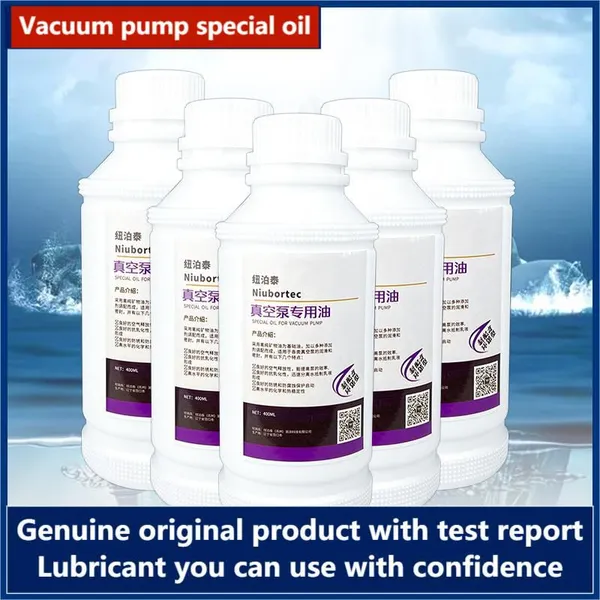
 Niubortec Vacuum Pump Oil 400ML*12NegotiableMOQ: 10 Cartons
 -
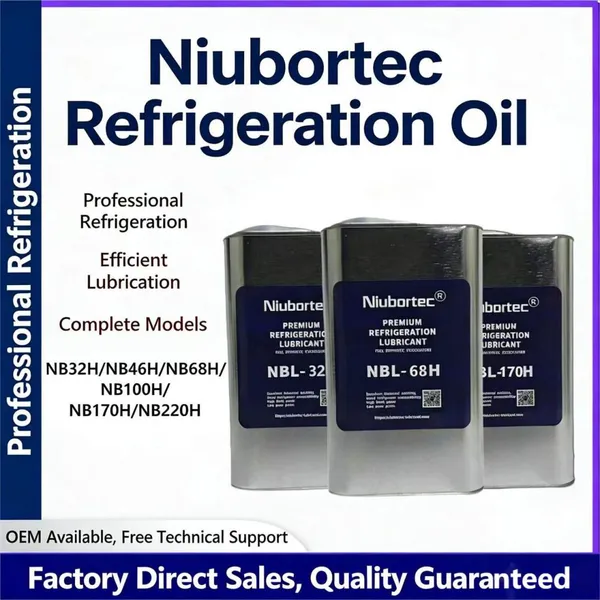
Fully Synthetic POE Refrigeration Oil 200LUS$ 1200 - 1250MOQ: 10 Barrels
-
Niubortec GS Series Mineral Refrigeration OilUS$ 824.6 - 875MOQ: 10 Barrels
-
Niubortec Fully Synthetic POE Refrigeration Oil 1LUS$ 15.6 - 18MOQ: 10 Cartons
-
Niubortec Fully Synthetic POE Refrigeration Oil 18LUS$ 157.5 - 159MOQ: 10 Cartons