 Business License
What is the difference between refrigeration and heating?
he core difference between refrigeration and heating lies in the direction of heat transfer. Both rely on the heat pump principle (for equipment such as air conditioners and heat pump water heaters) or energy conversion to meet different temperature needs. Refrigeration involves "extracting" heat from the indoor space and discharging it outdoors to lower the indoor temperature: through the cycle of refrigerant evaporating to absorb heat (indoor side) and compressing to condense and release heat (outdoor side), excess indoor heat is transferred to the outside, maintaining a cool environment, which is commonly used for cooling in summer. Heating is the opposite—it extracts heat from the outdoors (low-temperature environment) and transfers it indoors to raise the temperature: even in cold outdoor conditions, the refrigerant can still absorb low-grade heat from the air through evaporation, convert it into high-grade heat via compressor compression, and then release it through the indoor heat exchanger to achieve heating in winter; some equipment also uses electric auxiliary heating to directly generate supplementary heat. In addition, there are differences in their working modes and energy consumption: in refrigeration mode, the outdoor unit's compressor and condenser operate at full capacity; during heating, some equipment needs to activate the defrosting function. The heating efficiency of heat pumps in low-temperature environments is usually higher than direct electric heating but lower than refrigeration efficiency. The core goal of both is to adjust the space temperature to a comfortable range through energy transfer or conversion, with the only difference being the direction of heat flow.
Recently Posted
-
General Impacts Caused by Improper Oil Selection
June 24, 2026General Impacts Caused by Improper Oil SelectionLubrication failure: Accelerates wear of reciprocating moving parts and shortens t Read More
 -
PAG Synthetic Refrigeration Oil
June 18, 2026Positive Effects: It has a high viscosity index with slight viscosity variation under high and low temperatures, as well as outsta Read More
 -
POE Synthetic Refrigeration Oil (Mainly Compatible with R134a/R407C/R410A, etc.)
June 17, 2026Positive Effects: It has excellent low-temperature fluidity to guarantee smooth oil supply for low-temperature units and normal op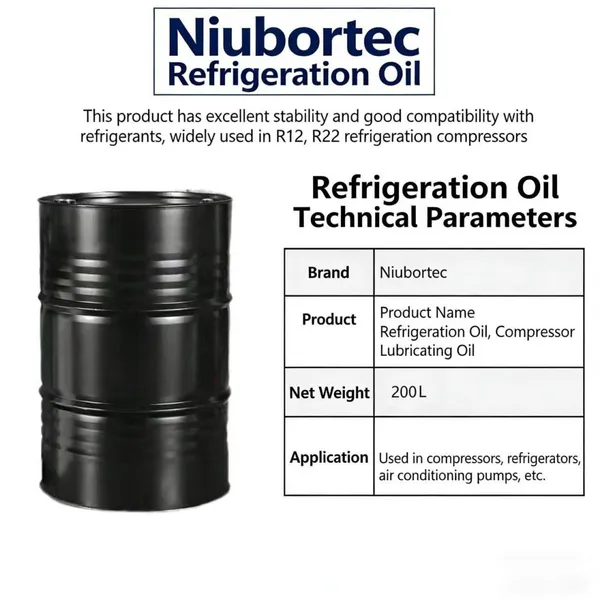 Read More
 -
Mineral Refrigeration Oil (Compatible with R22)
June 16, 2026Positive Effects: It forms high-strength oil films with excellent lubrication and sealing performance. It effectively reduces wear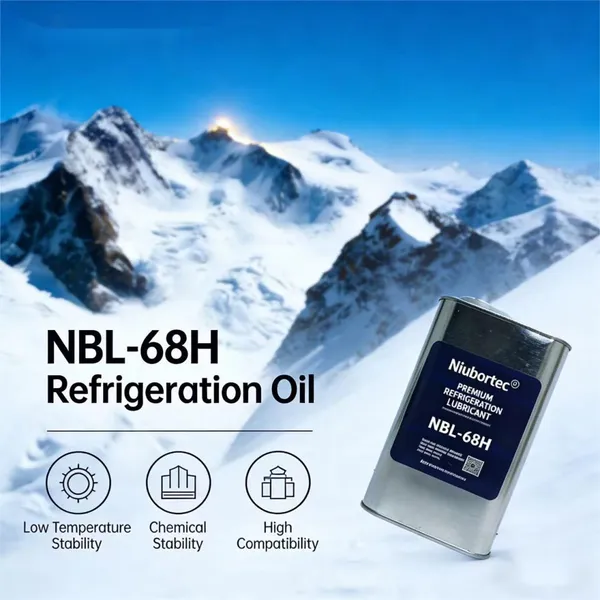 Read More

Contact Us

Recommended Products
-
 Niubortec Vacuum Pump Oil 400ML*12NegotiableMOQ: 10 Cartons
 -
Fully Synthetic POE Refrigeration Oil 200LUS$ 1200 - 1250MOQ: 10 Barrels
-
Niubortec GS Series Mineral Refrigeration OilUS$ 824.6 - 875MOQ: 10 Barrels
-
Niubortec Fully Synthetic POE Refrigeration Oil 1LUS$ 15.6 - 18MOQ: 10 Cartons
-
Niubortec Fully Synthetic POE Refrigeration Oil 18LUS$ 157.5 - 159MOQ: 10 Cartons